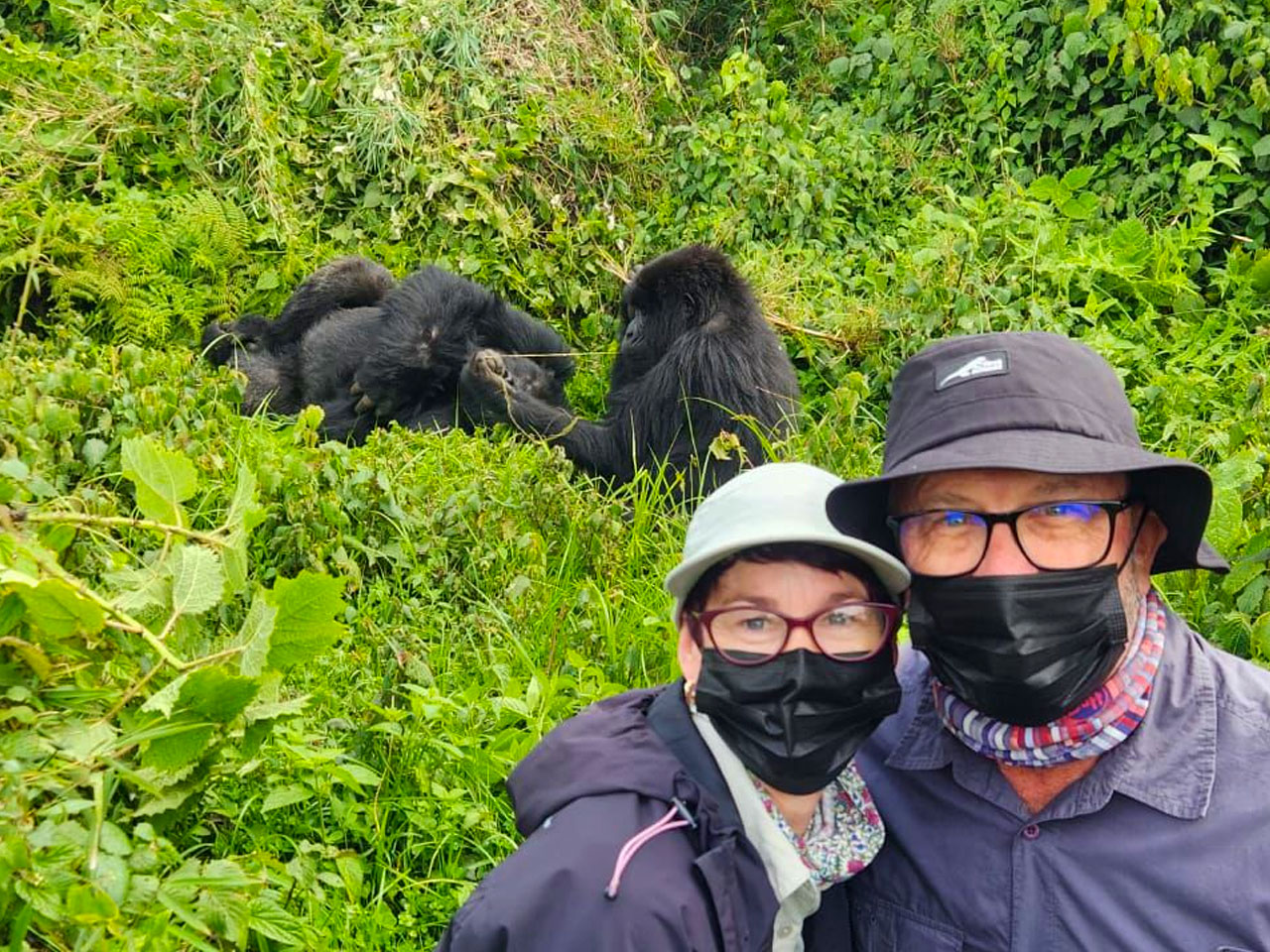
Gorilla trekking is one of the most sought-after and treasured adventure experiences in East Africa. Often described as a once-in-a-lifetime experience, this remarkable encounter with mountain gorillas takes place in Uganda, Rwanda, and the Democratic Republic of Congo.
At One More Adventure Safaris, we believe that understanding what influences the quality of your gorilla trekking experience helps travelers plan better and set realistic expectations. While gorilla encounters are always unique and rewarding, several factors on the trekking day can shape how memorable the experience becomes.
It is important to note that each national park has multiple habituated gorilla families, each occupying a specific territory within the forest. The family you trek and the conditions of the day play a key role in your experience.
Below are the main factors that determine the quality of a gorilla trekking experience:
1. Topography
The terrain where a gorilla family is located greatly affects the trekking experience.
- Flat or gently sloping areas offer easier trekking and are ideal for travelers with mobility concerns or those seeking a less physically demanding hike. Gorillas in these areas are often easier to observe and photograph.
- Steep and hilly terrain requires more physical effort and can be challenging, but it is highly rewarding for adventurous hikers who enjoy combining hiking with wildlife encounters.
2. Weather Conditions
Weather plays a significant role in gorilla behavior and trekking comfort.
- On hot days, gorillas tend to stay in shaded and dense vegetation, making sightings more challenging.
- During cool or overcast weather, gorillas are more active and are often found in open areas, and active, offering better viewing opportunities.
- On rainy days, gorillas may be less active and visibility can be reduced, though the forest becomes lush and scenic.
3. Size of the Gorilla Family
The size of the gorilla family also influences the experience.
- Larger families provide richer encounters, allowing visitors to observe a variety of behaviors from playful juveniles to dominant silverbacks.
- Smaller families still offer intimate experiences, though with fewer individuals to observe.
4. Vegetation Density
Vegetation affects visibility and photography.
- Gorilla families in open vegetation are easier to spot and photograph.
- Dense forest and thick undergrowth can make sightings more challenging but add to the true wilderness feel of the trek.
5. Travel Season
Choosing the right travel season enhances the overall experience.
- Dry seasons generally provide easier trekking conditions and better visibility.
- Rainy seasons, while more challenging, offer lush green landscapes that are excellent for photography and often come with fewer visitors.
Conclusion
While gorilla trekking is rewarding in all seasons, choosing travel months with favorable weather increases comfort and visibility. That said, rain does not fall daily even during wet seasons, and the green environment during these months can create stunning photographic opportunities.
For expert guidance on planning and booking your gorilla trekking adventure, get in touch with our sales team at One More Adventure Safaris. We are happy to tailor your gorilla tour to match your interests, fitness level, and budget—ensuring an unforgettable experience in the wild.
Let us help you craft your perfect gorilla trekking safari.